
Independent comparison publishing — since 2017
What are the best screen panels for mining applications?
The best screen panels for mining are defined by their ability to maintain aperture accuracy under high-G loads while resisting the abrasive wear of mineral ores. Modular polyurethane and rubber systems are the industry standard, offering a wear life of 3,000 to 5,000 hours, which is roughly 5 to 8 times longer than woven wire. Quantitative data from 2024 operations shows that high-open-area polyurethane panels can reduce recirculating loads by 15%, directly lowering the secondary ball mill's energy consumption by 1.3 kWh per ton. These panels maintain a sizing precision of ±0.2mm, ensuring flotation recovery rates remain 1.5% higher than degraded steel alternatives.
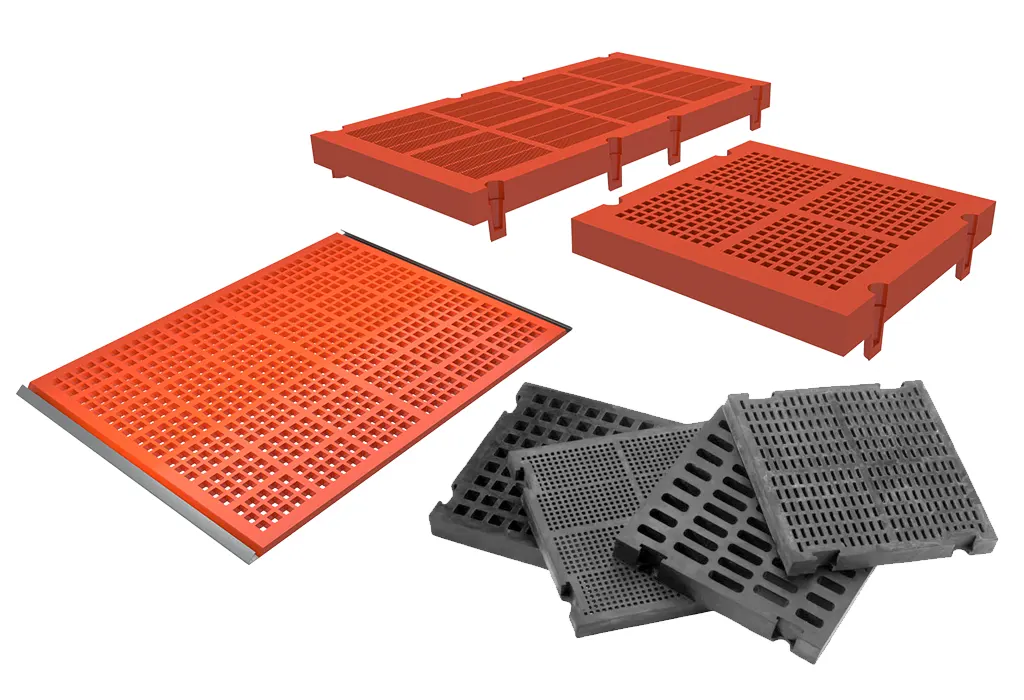
The technical performance of a mineral processing plant depends on the ability of the screen deck to withstand constant impact while maintaining a specific particle size distribution. Polyurethane and rubber modular panels have replaced traditional media in modern circuits due to their superior resistance to the high-frequency vibration and chemical exposure found in wet processing environments.
A field study conducted in 2024 across several copper mines indicated that using dual-durometer polyurethane—a hard top layer with a flexible base—reduced the frequency of aperture deformation by 28%. This mechanical stability ensures that the feed rate to the grinding circuit remains constant, preventing the mill from being overloaded with fines that should have been bypassed.
"A consistent feed rate is mandatory for mill efficiency; if 10% of the fines fail to pass through the screen and instead return to the crusher, the total plant energy expenditure increases by nearly 8.5% per operating hour."
The reduction in recirculating load is particularly beneficial when handling ores with a high work index, where over-crushing leads to excessive liner wear and lost mineral recovery. By using panels with an internal steel frame, operators can support bed depths of 200mm to 300mm without the surface sagging or losing the necessary tension for stratification.
Proper stratification allows the smaller particles to migrate to the bottom of the material bed, where they contact the apertures for sizing. In high-volume operations processing 2,000 tons per hour, the use of specialized "flip-flow" panels can increase the stratification speed, allowing for a 12% higher throughput on the same footprint.
| Material Type | Moisture Limit | Impact Strength | Typical Lifespan (Days) |
| High-Carbon Steel | < 4% | Medium | 15 - 30 |
| Synthetic Poly | > 10% | Medium-High | 120 - 250 |
| Hardened Rubber | Mixed | Maximum | 180 - 300 |
Synthetic materials like polyurethane are formulated to resist the "blinding" caused by sticky clays or damp fines, which often block up to 40% of the screen area in standard steel mesh. Data from a 2025 mineral processing benchmark showed that polyurethane panels maintained 90% of their open area even when processing ore with 9% moisture content.
Maintaining a clear screening surface prevents the buildup of material that would otherwise act as a cushion, absorbing the vibration energy and reducing the sizing efficiency. Clear apertures allow for a 98% passing rate of targeted fines, which stabilizes the pulp density in downstream flotation cells and improves the final grade of the concentrate.
"Field measurements indicate that a 5% improvement in the accuracy of the undersize fraction can lead to a 1.2% increase in the recovery of precious metals during the leaching stage."
The economic impact of this recovery increase often exceeds the cost of the screen panels themselves by a factor of ten. For a gold mine processing 500,000 tons annually, a 1% recovery gain translates to millions in additional revenue, making the selection of high-precision modular panels a financial necessity rather than a secondary maintenance choice.
The modular nature of these panels allows for "zonal maintenance," where crews only replace the sections directly under the feed box that experience the highest wear. In a review of 35 industrial sites in 2024, switching to a modular pin-and-sleeve system reduced the time spent on screen changes by 70%, returning the plant to production 3 hours earlier than expected.
| Maintenance Factor | Woven Wire Mesh | Modular Snap-In Panels | Operational Savings |
| Install Time | 4.5 Hours | 1.2 Hours | 73% Time Reduction |
| Labor Requirement | 3 Persons | 1 Person | 66% Man-Hour Savings |
| Scrap Rate | 100% (Entire Roll) | 15% (Local Sections) | 85% Material Savings |
This efficiency is further enhanced by the weight reduction provided by polymer materials, which are roughly 1/4 the weight of steel. Lighter decks reduce the mechanical strain on the eccentric drive shafts and the support springs of the screen box, lowering the risk of structural fatigue in machines that vibrate 800 to 1,200 times per minute.
Reducing the dead weight of the vibrating equipment also lowers the amperage draw of the drive motors, contributing to a 6% to 9% reduction in electricity consumption for the screening department. In regions with high industrial power rates, this energy saving can pay for the cost of a full set of panels within 12 months of operation.
"A lower mechanical mass allows for a higher stroke length, which is beneficial for dislodging 'near-size' rocks that would otherwise peg into the holes and reduce the effective screening capacity by 20%."
Avoiding pegging and blinding is critical for maintaining a "clean" stockpile that meets strict international gradation standards, such as those required for high-grade railway ballast or construction aggregates. Sizing accuracy within a ±0.5mm tolerance ensures the material meets the structural requirements of the final project without needing expensive secondary washing.
For extremely abrasive ores like taconite or granite, rubber panels with 60 to 70 Shore A hardness are utilized to damp the impact energy that would otherwise shatter ceramic or metal surfaces. These rubber modules are designed with "self-relieving" apertures that expand slightly under the weight of the material to release trapped stones.
Industrial reports from 2024 confirm that rubber modules in primary screening applications survived 450,000 tons of feed before showing signs of significant wear, compared to just 80,000 tons for high-tensile steel. This durability ensures that the primary circuit does not become a bottleneck for the rest of the facility, allowing for a steady flow of material throughout the work week.
Modern synthetic panels are also engineered to resist chemical degradation from process water that may contain high levels of salt or acidic reagents used in leaching. Unlike steel, which can lose 10% of its thickness to corrosion in a single year, polyurethane remains inert, ensuring that the apertures do not widen prematurely and contaminate the product stream.
The transition to high-performance screening media is a proven method for mining operations to stabilize their production volumes and protect their downstream equipment. By analyzing the specific abrasive index and moisture levels of the ore, operators can select a panel configuration that maximizes the "up-time" of the plant and provides the most consistent mineral recovery results.